

The Great Lakes region has beach towns, harbor cities, island gateways, and quiet shoreline communities that feel different from ocean destinations. Instead of saltwater and palm trees, travelers find freshwater beaches, lighthouses, dunes, ferry docks, wooded trails, and walkable main streets. The region also works for many kinds of trips because each lake has its own feel. Some towns are best for classic beach days, while others are stronger for scenery, boating, history, or simple waterfront wandering.
1) Traverse City, Michigan
Traverse City is one of the strongest starting points for a northern Lake Michigan trip. The area gives travelers access to beaches, wineries, downtown shops, and nearby Sleeping Bear Dunes National Lakeshore. Sleeping Bear Dunes draws more than 1.5 million visits each year and includes beaches, dunes, forests, inland lakes, farmsteads, and a historic maritime village.
This makes Traverse City useful for travelers who want a coastal town with more than one kind of day. A visitor can spend one day near the water, another exploring dunes, and another walking through town. It is also a practical base because the area has enough restaurants, lodging, and activities to support a full long weekend.
The main thing to know is that Traverse City is not a hidden escape in peak summer. Families, couples, and road trippers all use it as a northern Michigan hub. Travelers who want quieter shore time may prefer late spring, early fall, or weekdays.
2) Bayfield, Wisconsin
Bayfield sits on Lake Superior and is closely tied to the Apostle Islands. The town works well for travelers who want a small harbor setting with access to bigger scenery nearby. Apostle Islands National Lakeshore includes 21 islands, a 12-mile mainland shoreline, sea caves, sandy beaches, and a large collection of lighthouses.
Bayfield itself feels like a gateway town. The pace is slower than a large beach city, and the lake is a major part of the experience. Visitors can look for boat tours, island trips, waterfront walks, local shops, and views across Lake Superior.
This is a better fit for travelers who enjoy natural scenery than for people who want a packed boardwalk. Lake Superior weather can also change quickly, so flexible plans help. A sunny boat day and a cool, misty harbor day can both be part of the same trip.
3) Saugatuck, Michigan
Saugatuck is a classic Lake Michigan town with an easy mix of beach time, small shops, art spaces, and relaxed streets. Its best-known beach is Oval Beach, which sits among tall sand dunes and near the Kalamazoo River as it moves toward Lake Michigan.
This town works especially well for travelers who want a polished but still low-stress coastal stop. Downtown Saugatuck has enough to do between beach visits, so the trip does not depend on perfect swimming weather. The nearby water, dunes, and town center make it easy to move between outdoor and indoor plans.
Saugatuck can feel busy during warm weekends, especially near the beach. Travelers who want a calmer visit may want to arrive early in the day or plan around shoulder-season dates. It is still one of the easiest Great Lakes towns to recommend because the town and shoreline are close together.
4) Grand Haven, Michigan
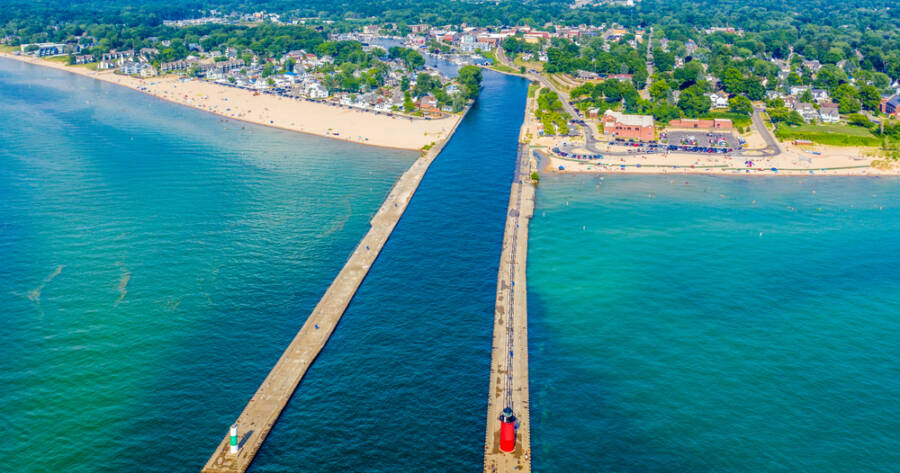
Grand Haven is a strong choice for travelers who want a Lake Michigan beach town with a clear waterfront path. The city’s boardwalk runs along the harbor and continues toward Lake Michigan, where visitors can reach the pier and see the lighthouse.
That layout makes Grand Haven easy to understand on a first visit. Travelers can park, walk, watch boats, stop near the harbor, and continue toward the beach and pier. The town feels active without requiring a complicated itinerary.
Grand Haven is also a good pick for people who like a traditional summer lake-town feel. The downside is that popular summer days can bring crowds near the waterfront. A simple plan, such as starting early and leaving room for a slow walk, can make the visit feel easier.
5) Marquette, Michigan
Marquette sits on Lake Superior in Michigan’s Upper Peninsula, and it has a stronger outdoors feel than many lower Michigan lake towns. Presque Isle Park is one of its major draws. The 323-acre forested peninsula reaches into Lake Superior and offers wide lake views, sandstone cliffs, and wooded trails.
This gives Marquette a rugged feel without making the trip too remote. Visitors can spend time downtown, then shift to rocky shoreline views and forested paths. The mix of local services and natural scenery makes it a good choice for travelers who want comfort and adventure in the same place.
Marquette is also a smart stop for travelers building a longer Upper Peninsula route. It has enough food, lodging, and town energy to serve as a base. The lake, though, is cold and powerful, so visitors should treat the shoreline with care and check local conditions before swimming or walking near rocks.
6) Erie, Pennsylvania
Erie gives the Great Lakes region a different kind of coastal stop because it connects a city setting with Presque Isle State Park. The park creates Presque Isle Bay, a deep harbor for Erie, and it is also known for beaches, boating, bird migration, and varied habitats.
This makes Erie useful for travelers who want beach access but also want the services of a larger city nearby. A visitor can spend time at the state park, then return to town for meals, hotels, museums, or indoor backup plans. That balance can help families who do not want every part of the trip to depend on the weather.
Erie may not have the same small-town feel as Bayfield or Saugatuck, but it offers a more practical kind of lake trip. It works well for travelers coming from Pennsylvania, Ohio, western New York, or nearby parts of the Midwest.
How to Choose the Right Great Lakes Coastal Town
The best town depends on the kind of lake trip a traveler wants. For dunes and a busy northern Michigan base, Traverse City is a strong choice. For island access and Lake Superior scenery, Bayfield stands out. For a polished Lake Michigan town with a well-known beach, Saugatuck is hard to beat.
Grand Haven is a good fit for a classic beach-and-boardwalk visit, while Marquette is better for rocky Lake Superior scenery and outdoor plans. Erie works well for travelers who want a larger city near a major lakefront park. It also helps to think about driving routes. The Great Lakes are huge, so towns that look close on a map may still require long drives around the water. A better plan is often to choose one lake or one shoreline region and explore it slowly.
Best Time to Visit the Great Lakes Coast
Summer is the easiest season for beach days, boat tours, waterfront dining, and family trips. It is also the busiest season in many of these towns. Travelers should expect more traffic, tighter lodging options, and fuller parking areas near popular beaches and piers.
Late spring and early fall can be better for travelers who care more about views, walking, food, and slower days than swimming. Lake temperatures may be cooler, but the towns can feel calmer. Fall can be especially rewarding in places like Traverse City, Marquette, and Door County-adjacent routes because trees, water, and small towns make a strong combination.
Winter is more limited but not without value. Some coastal towns become quiet retreats, and Lake Superior areas can feel dramatic in cold weather. Still, travelers should check road, ferry, park, and weather conditions before building a winter trip around the shoreline.
A Freshwater Coast Worth Slowing Down For
The best Great Lakes coastal towns are not all the same, which is part of their appeal. Some feel like beach towns. Some feel like harbor villages. Others work more like outdoor base camps or city-and-park combinations.
A strong trip starts with matching the town to the traveler. Choose Traverse City for variety, Bayfield for island scenery, Saugatuck for an easy beach-town feel, Grand Haven for a classic waterfront walk, Marquette for Lake Superior edges, or Erie for a practical city-and-shoreline mix.
The Great Lakes coast rewards slow travel. Pick fewer stops, leave time for the water, and avoid treating the region like a checklist. The best moments often happen between the main attractions, during a harbor walk, a beach pause, or a quiet view across fresh water that looks almost endless.