

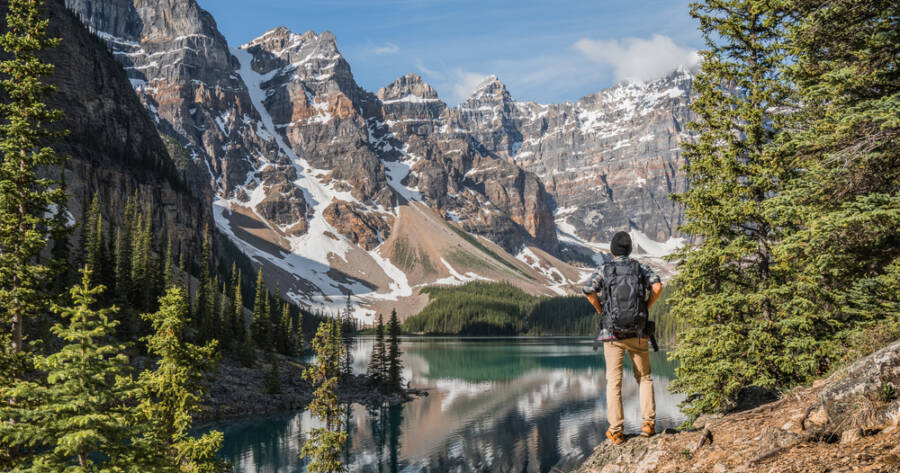
Natural landscapes around the world offer opportunities for travelers who enjoy hiking and outdoor exploration. Mountains, forests, coastal paths, and national parks provide settings where visitors can experience scenic views and physical activity at the same time. Many destinations offer well-maintained trails, diverse ecosystems, and access to breathtaking natural environments. Whether exploring rugged mountain terrain or peaceful forest paths, hiking destinations often provide rewarding experiences for travelers seeking adventure and connection with nature.
Banff National Park, Canada
Banff National Park offers some of the most iconic mountain scenery in North America. Located in the Canadian Rockies, the park features dramatic peaks, turquoise lakes, and a network of well-maintained hiking trails. Trails range from gentle lakeside walks to more challenging alpine routes that reward hikers with sweeping views of surrounding mountains.
Many visitors enjoy hiking near landmarks such as Lake Louise and Moraine Lake, where clear waters reflect towering peaks. Wildlife sightings, glacier-fed streams, and scenic viewpoints make the park a popular destination for outdoor enthusiasts. Banff’s combination of accessible trails and breathtaking scenery attracts hikers from around the world.
- Difficulty level: Easy to hard, depending on the trail and elevation.
- Best time to visit: Late June through September for the broadest hiking access.
- Permits and access: Parks Canada shuttles to Lake Louise and Moraine Lake require reservations, and shuttle or transit access is often the most dependable way to reach those popular areas.
Torres del Paine National Park, Chile
Torres del Paine National Park is widely known for its striking mountain formations and remote wilderness landscapes. Located in southern Chilean Patagonia, the park features towering granite peaks, glaciers, lakes, and expansive grasslands. The dramatic scenery creates a memorable environment for travelers seeking outdoor adventure.
The park’s famous trekking routes, including the W Trek and the O Circuit, offer multi-day hiking opportunities through diverse landscapes. Shorter trails also allow visitors to experience viewpoints, waterfalls, and glacial lakes. The park’s unique terrain and wildlife make Torres del Paine a remarkable destination for hiking enthusiasts.
- Difficulty level: Moderate to hard for the major treks; easier viewpoints and day hikes are available.
- Best time to visit: Late spring through early fall in Patagonia, with peak trekking demand during the warmer months.
- Permits and access: Park entry tickets must be purchased in advance, and hikers on the W or Paine Massif Circuit need required reservations for campsites before entering the mountain area.
The Dolomites, Italy
The Dolomites in northern Italy offer a distinctive landscape of sharp limestone peaks and alpine meadows. The region features a vast network of hiking trails that range from leisurely paths to challenging mountain routes. Many trails connect traditional mountain huts that provide rest stops and scenic views across the alpine terrain.
Hikers often visit the Dolomites during the summer months when wildflowers bloom across the valleys. Cable cars and lifts also allow visitors to access higher elevations more easily. The combination of dramatic mountain scenery and welcoming alpine villages makes the Dolomites a favorite destination for outdoor travelers.
- Difficulty level: Easy to hard, with both family-friendly walks and demanding alpine trails.
- Best time to visit: Late June through mid-September is commonly treated as the main high-country hiking window.
- Permits and access: Many day hikes do not need a hiking permit, but hut-to-hut trips usually require advance reservations, especially on popular routes.
Milford Track, New Zealand
New Zealand’s Milford Track is often considered one of the world’s most scenic long-distance hiking routes. Located within Fiordland National Park, the trail passes through rainforests, alpine valleys, and glacial rivers before reaching the dramatic fjords of the region. Towering mountains, cascading waterfalls, and lush vegetation create a constantly changing landscape along the path. The remote setting offers hikers a chance to experience one of New Zealand’s most remarkable natural environments.
The track stretches across several days of hiking and includes landmarks such as Mackinnon Pass and Sutherland Falls. Hikers experience changing landscapes along the route, from dense forest trails to open alpine views. Well-maintained huts along the trail provide resting points and overnight accommodations for multi-day hikers.
- Difficulty level: Intermediate during the Great Walks season; more serious outside that season.
- Best time to visit: November through April is the main Great Walks season.
- Permits and access: Hut and transport bookings are required, and the track should be planned through the official booking system before travel.
Yosemite National Park, United States
Yosemite National Park offers some of the most recognizable landscapes in the American West. Granite cliffs, giant sequoia trees, and powerful waterfalls create a dramatic backdrop for hiking and outdoor exploration. The park includes hundreds of miles of trails that allow visitors to experience its diverse terrain.
Popular hiking routes lead to viewpoints overlooking landmarks such as Half Dome and Yosemite Valley. Trails range from short scenic walks to longer hikes that explore higher elevations within the park. Yosemite’s natural beauty and accessible trail system continue to attract outdoor travelers from around the world.
- Difficulty level: Easy to very hard, depending on route.
- Best time to visit: Spring through fall for the broadest trail options, with higher-elevation access depending on conditions.
- Permits and access: Yosemite does not require an entrance reservation in 2026, but Half Dome requires a permit when the cables are up, and overnight wilderness trips require wilderness permits.
Zion National Park, United States
Zion National Park adds a canyon-focused hiking experience that feels very different from alpine destinations. Instead of wide mountain valleys, hikers move through sandstone cliffs, narrow canyons, river corridors, and desert viewpoints. This makes Zion a strong addition for readers who want dramatic scenery but not another snow-capped mountain destination.
The park has a wide range of trail difficulty. Riverside Walk is more approachable, while Angels Landing is strenuous and exposed, and The Narrows can involve hiking in the Virgin River. Travelers should plan around heat, flash flood risk, shuttle access, and trail-specific rules.
- Difficulty level: Easy to strenuous, with some routes involving exposure, river travel, or canyon conditions.
- Best time to visit: Spring and fall are often more comfortable for hiking than peak summer heat.
- Permits and access: Angels Landing requires a permit, while The Narrows from the Temple of Sinawava upstream does not require a permit; other activities such as canyoneering, wilderness hiking, and backcountry camping may require permits.
Swiss Alps, Switzerland
The Swiss Alps are ideal for travelers who want village-to-village hiking with strong public transportation support. Many routes connect mountain towns, rail stations, lifts, and marked trails, which can make alpine hiking feel more organized than in some remote wilderness areas. The region is especially appealing for travelers who want big scenery without carrying full backpacking gear every day.
Difficulty depends heavily on the route. Some paths are gentle and scenic, while long-distance routes like the Via Alpina are more demanding. Switzerland Tourism describes the Via Alpina as a challenging route through the northern Swiss Alps, crossing 14 Alpine passes over 20 daily stages.
- Difficulty level: Easy to hard, depending on distance, elevation, and route type.
- Best time to visit: Summer into early fall is usually best for high-country hiking.
- Permits and access: Most standard hiking routes do not need permits, but travelers should book huts, hotels, lifts, and train connections ahead for popular village-to-village routes.
Scottish Highlands, United Kingdom
The Scottish Highlands offer a rugged hiking experience shaped by moors, mountains, lochs, glens, and fast-changing weather. This destination is a strong fit for travelers who want open landscapes and a less polished trail feel than some major national parks. It can be beautiful, but it also rewards careful planning.
The Highlands can be approachable on lower-level walks, but mountain routes may become difficult quickly due to rain, wind, fog, boggy ground, and limited visibility. Hikers should plan with maps, weather checks, layers, and realistic turnaround times.
- Difficulty level: Easy to hard, with serious mountain routes for experienced hikers.
- Best time to visit: Late spring through early fall usually gives the most practical hiking conditions, though weather can change in any season.
- Permits and access: Scotland has broad outdoor access rights, but hikers must follow the Scottish Outdoor Access Code by respecting others, caring for the environment, and taking responsibility for their own actions.
Finding Adventure Through Outdoor Exploration
Hiking destinations around the world provide opportunities to experience nature in meaningful ways. Trails that pass through mountains, forests, and national parks allow travelers to witness landscapes that often feel far removed from everyday routines. Outdoor adventures often combine physical activity with moments of quiet reflection in natural surroundings. Many hikers appreciate the sense of calm that comes from spending extended time in nature.
Exploring hiking destinations can also encourage appreciation for environmental conservation and natural beauty. Many travelers find that time spent outdoors strengthens their connection with the environment and promotes a sense of calm and perspective. Observing wildlife, natural landscapes, and changing weather patterns often creates memorable experiences along the trail.