

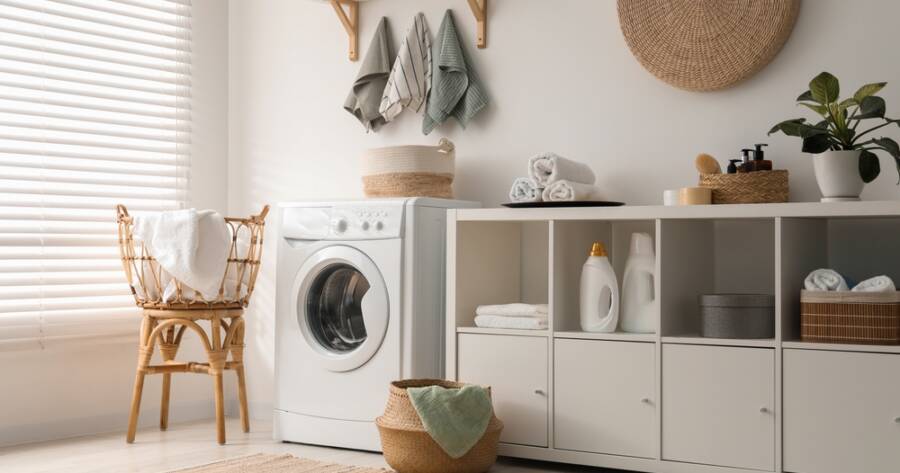
A small laundry room can become crowded fast. Detergent, dryer sheets, hampers, cleaning tools, hangers, baskets, and extra linens all compete for the same few feet. The goal is not to pack in more stuff. It is to give every useful item a clear place, while keeping the washer, dryer, doors, and walkways easy to use. With the right storage plan, even a narrow laundry closet can feel cleaner, safer, and easier to manage.
Use Wall-Mounted Shelves Above the Machines
The wall above a washer and dryer is one of the best places to add storage in a small laundry area. Wall-mounted systems can hold detergent, stain remover, baskets, and folded items without taking up floor space. IKEA’s BOAXEL laundry combination is a wall-mounted system that can be used for detergents, dirty laundry, and clean laundry that needs to dry.
This idea works best when shelves are placed high enough to avoid blocking appliance lids, doors, hoses, and controls. In a tight room, shallow shelves may be easier to use than deep shelves because they keep supplies visible and reachable.
Closed cabinets can look neater, but open shelves may be better when speed matters. A simple basket for stain tools, a tray for daily detergent, and a small bin for dryer balls can keep the shelf from turning into a clutter pile.
Add a Narrow Rolling Cart Beside the Washer
A slim rolling cart can turn the small gap beside a washer or dryer into useful storage. Some narrow carts are designed for tight spaces and include rolling casters, handles, and stacked shelves.
This is a good option for renters or homeowners who do not want to drill into walls. The cart can hold small bottles, dryer sheets, lint rollers, clothespins, or cleaning gloves. Since it rolls out, items in the back are easier to reach than they would be in a fixed narrow cabinet.
The key is to keep the cart limited to laundry supplies. If it becomes a place for batteries, pet items, tools, and random extras, the room will feel crowded again. Use one shelf for washing supplies, one for drying supplies, and one for small extras that truly belong there.
Choose Over-Washer Storage for Vertical Space
Over-washer and over-dryer shelving can help when there is not enough room for cabinets. Some units include shelves, hanger rods, and hooks, giving users a place for lightweight clothes, towels, and cleaning items.
This setup can be useful in apartments, laundry closets, garages, and small utility rooms. It creates a storage zone around the machines without needing a full remodel. It can also give a small room a hanging spot for air-dry pieces.
Before choosing this idea, measure carefully. Check the width and height of the washer and dryer, the location of wall outlets, and the way appliance doors open. A shelf that blocks a lid, vent, hose, or control panel can cause more problems than it solves.
Mix Open and Closed Storage
Small laundry rooms often need both open and closed storage. Open shelves are useful for items used every laundry day, while closed cabinets help hide clutter, extra bottles, and less attractive supplies. IKEA’s ENHET laundry storage combinations include a mix of open and closed storage with room for a washing machine and laundry bin.
This mix helps keep the room practical and calm. Detergent and stain spray can stay easy to grab, while bulk supplies, backup sponges, and extra cleaning cloths can sit behind a cabinet door. That balance matters when the laundry area is visible from a hallway, kitchen, bathroom, or mudroom.
For a small room, do not fill every cabinet and shelf to the edge. Leave a little open space so items can move in and out easily. A packed cabinet is harder to use and often becomes messy again within a week.
Use Hooks for Tools, Bags, and Hang-Dry Items
Hooks are one of the simplest ways to add storage without adding furniture. They can hold mesh laundry bags, hangers, a small ironing pad, a lint brush, or lightweight cleaning tools. The Elfa laundry room system includes hooks and tool holders for out-of-the-way storage for mops, brooms, and dusters.
Hooks work especially well on the back of a door, beside a cabinet, or on a short wall that is too narrow for shelves. A row of hooks can also create a small landing zone for items that should not go in the dryer.
The mistake is adding too many hooks and hanging everything in sight. In a limited space, hooks should solve a specific problem. Use them for items that need to hang, dry, or stay within arm’s reach.
Create a Hamper System That Fits the Room
A small laundry room needs a hamper plan, not just a hamper. If one large basket blocks the door or walkway, the room will feel messy even when it is organized. Several laundry basket storage options are preferred, such as pull-out cabinet storage, cubbies, collapsible baskets, wheeled hampers, and pedestal drawers.
The best choice depends on the room shape. A tall hamper may work in a narrow corner. A rolling hamper may work under a folding surface. Collapsible baskets may work better in a laundry closet where baskets need to disappear when not in use.
If the household sorts clothes by person, color, or wash type, labels can help. Simple labels like “towels,” “dark clothes,” and “delicates” are easier than a complicated system nobody follows.
Add a Folding Surface Where It Makes Sense
A folding surface can make a small laundry room feel more complete. In a front-load setup, a counter over the washer and dryer can create a flat space for folding, sorting, and stacking clean clothes. In a top-load setup, a wall-mounted drop-down surface or small side table may work better.
The folding zone should not become permanent storage. If clean clothes sit there for days, the room loses its function. A better plan is to fold, sort into baskets, and move clothes out of the room before the next load starts.
For very tight rooms, skip the built-in counter and use a removable tray, a fold-down shelf, or a nearby table. The right folding solution is the one that supports the laundry routine without blocking access to the machines.
Keep Unsafe or Unneeded Items Out
Storage is not only about adding more shelves. It is also about deciding what does not belong in a small laundry room. Items that have nothing to do with laundry can crowd the space and make daily tasks harder.
Heat, moisture, and appliance movement should also shape storage choices. Avoid stacking heavy items on machines, and keep products away from places where they could fall, spill, or block ventilation. Small rooms work better when every item supports washing, drying, folding, cleaning, or sorting.
A seasonal cleanout can help. Remove empty bottles, old stain removers, broken baskets, and supplies nobody uses. A smaller number of useful items will beat a crowded room full of backups.
A Small Laundry Room Works Best With Clear Zones
The best laundry room storage plan starts with zones. Create one zone for washing supplies, one for drying supplies, one for sorting, one for hang-dry items, and one for cleaning tools. Even if the room is tiny, zones make it easier to know where things belong.
The strongest ideas are usually simple: shelves above the machines, a slim cart in the gap, hooks on empty walls, a hamper that fits, and a folding surface that does not block the room. These choices do not need to make the laundry area fancy. They need to make it easier to use.
A small laundry room will always have limits, but it does not have to feel chaotic. When storage follows the way the household actually does laundry, the room can stay cleaner with less effort.